
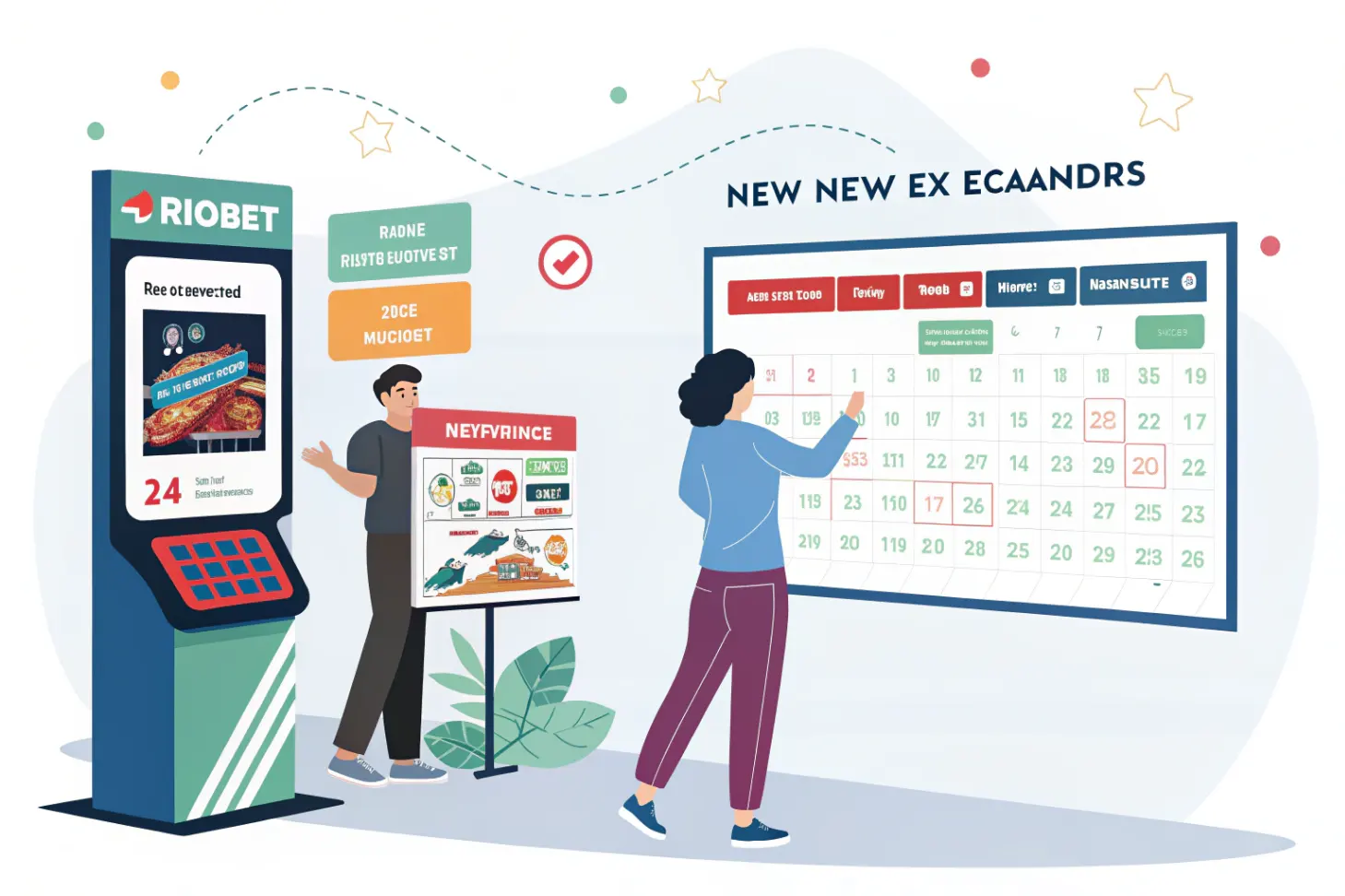
Modern online betting platforms are no longer competing only on odds or bonuses. The real battlefield has shifted toward user experience, long-term engagement, and emotional connection with the player. In this context, RioBet introduces a new UX scenario built around three tightly connected elements: an activity calendar, a structured achievements system, and recurring giveaways. Together, these mechanics form a unified ecosystem that transforms routine betting into an interactive journey.
This article explores how the new RioBet UX scenario works, why it is effective from both a psychological and technical standpoint, and how it improves retention, session depth, and overall player satisfaction without overwhelming the user.
The Role of UX in Modern Betting Platforms
User experience has become a strategic asset for online betting brands. Players expect clarity, transparency, and intuitive navigation, but they also look for motivation and a sense of progression. A well-designed UX does not distract from betting itself; instead, it quietly guides the user, helping them discover features, return regularly, and feel rewarded for their activity.
RioBet’s updated UX scenario is built around behavioral patterns rather than static design. Instead of forcing users to search for promotions or bonuses, the platform surfaces relevant actions at the right moment. The calendar, achievements, and giveaways are not separate features but interconnected layers that respond to user behavior. This approach reduces friction, increases predictability, and encourages consistent engagement without aggressive prompts.
From a usability perspective, this scenario also lowers cognitive load. Players no longer need to remember dates, conditions, or hidden rewards. Everything is presented in a single logical flow that evolves as the user interacts with the platform.
Activity Calendar as a Central Engagement Tool
The activity calendar is the structural backbone of the new RioBet UX scenario. It acts as a visual roadmap of events, challenges, and opportunities available to the player over time. Instead of scattered promotions, users see a clear timeline that explains what is happening today, what is coming next, and what has already been completed.
Before interacting with the calendar, the user encounters a short contextual explanation that frames it as a personal activity tracker rather than a promotional banner. This positioning is critical: the calendar feels like a tool designed for the player, not a marketing instrument.
The table below illustrates how the RioBet activity calendar organizes different types of interactions and rewards into a coherent structure.
| Calendar Element | Purpose | User Benefit | UX Impact |
|---|---|---|---|
| Daily Activities | Short tasks tied to betting or exploration | Encourages regular logins | Builds routine behavior |
| Weekly Challenges | Medium-term goals with layered rewards | Increases session depth | Sustains engagement |
| Event Highlights | Time-limited promotions or tournaments | Creates urgency | Drives peak activity |
| Completed Marks | Visual confirmation of progress | Reinforces achievement | Boosts motivation |
After interacting with the calendar, the user immediately understands how their actions fit into a broader system. This clarity reduces frustration and increases trust. Instead of feeling pressured to act quickly, players feel informed and empowered, which leads to more voluntary participation.
The calendar also adapts dynamically. Inactive users see simplified tasks designed to reintroduce them gently, while active players are offered deeper challenges. This adaptive logic ensures relevance without fragmenting the interface.
Achievements System and Motivational Design
The achievements system is where the RioBet UX scenario becomes emotionally engaging. Achievements are not just badges; they represent milestones that validate the player’s time and skill. Each achievement is carefully framed with clear criteria and visible progress indicators.
Before presenting achievements, the interface introduces them as a personal journey rather than a competition. This distinction matters because it removes pressure and comparison anxiety. Players focus on their own progress, not on leaderboards they cannot realistically reach.
Within the achievements framework, several core motivational principles are applied:
- Clear progress tracking that shows partial completion instead of binary success.
- Immediate visual feedback after each meaningful action.
- Tiered achievements that evolve with the player’s experience level.
- Subtle rewards that complement betting rather than replace it.
After the list of achievement principles, the system explains how each completed milestone feeds back into the calendar and giveaway mechanics. Achievements unlock calendar events, while calendar participation accelerates achievement completion. This circular design creates momentum without forcing repetitive actions.
Importantly, achievements are never positioned as mandatory. They exist in parallel with normal betting activity, allowing casual users to ignore them while still benefiting indirectly from the improved UX flow.
Giveaways as a Retention Mechanism
Giveaways in the new RioBet UX scenario are integrated as moments of surprise rather than predictable promotions. Instead of fixed bonus pages, giveaways appear contextually based on calendar activity and achievement progress.
From a UX standpoint, giveaways are intentionally lightweight. They do not interrupt betting sessions or require complex activation steps. The interface communicates eligibility clearly and confirms participation instantly, reducing uncertainty.
The psychological impact of this approach is significant. When giveaways feel earned rather than requested, they reinforce positive emotions toward the platform. Players associate RioBet with fairness and appreciation, not pressure.
Another key aspect is transparency. Each giveaway includes a short explanation of why the user qualifies. This explanation builds trust and encourages users to continue engaging with the system, as the reward logic feels understandable and consistent.
Integration of Calendar, Achievements, and Giveaways
The true strength of the RioBet UX scenario lies in how seamlessly its components interact. The calendar introduces opportunities, achievements give them meaning, and giveaways provide tangible reinforcement. None of these elements dominates the interface; instead, they support each other quietly in the background.
When a user completes a calendar task, the system immediately reflects this progress in the achievements panel. When an achievement milestone is reached, the calendar updates with new events or highlights. Giveaways then appear as natural outcomes of this progression rather than isolated rewards.
This integration reduces feature fatigue. Users do not feel overwhelmed by multiple systems competing for attention. Everything exists within a single narrative that unfolds over time.
From a technical perspective, this unified UX scenario also simplifies decision-making. The platform no longer needs to push generic promotions. Instead, it reacts to user behavior in real time, offering relevant incentives at the right moment.
Personalization and Behavioral Adaptation
Personalization is a core pillar of the new RioBet UX scenario. The system observes user behavior patterns such as login frequency, betting preferences, and interaction depth. Based on this data, it adjusts the complexity and visibility of calendar events, achievements, and giveaways.
New users encounter a simplified interface with fewer tasks and clearer guidance. Experienced players see richer layers, including advanced achievements and exclusive calendar events. This gradual scaling prevents intimidation while still offering depth for long-term users.
Behavioral adaptation also improves accessibility. Users who prefer mobile interaction experience streamlined layouts and concise prompts, while desktop users benefit from expanded visual context. Despite these differences, the underlying logic remains consistent, preserving familiarity across devices.
Crucially, personalization never feels invasive. The UX avoids explicit references to tracking or data usage. Instead, adaptations appear natural, as if the platform simply understands the player’s preferences.
Long-Term Impact on User Engagement
Over time, the RioBet UX scenario reshapes how users interact with the platform. Instead of sporadic visits driven by external promotions, players develop habitual engagement supported by the calendar structure. Achievements provide long-term goals, while giveaways offer periodic reinforcement.
This combination increases key engagement metrics organically. Session frequency rises because users want to maintain progress streaks. Session duration grows as challenges encourage deeper exploration. Most importantly, user satisfaction improves because the experience feels coherent and respectful of the player’s time.
From a brand perspective, this UX scenario strengthens loyalty. Players are less likely to switch platforms when they feel invested in an ongoing journey. The sense of continuity becomes a competitive advantage that cannot be easily replicated through bonuses alone.
Conclusion: A Cohesive UX Strategy for Sustainable Growth
The new RioBet UX scenario demonstrates how thoughtful design can transform standard betting mechanics into a meaningful user journey. By uniting an activity calendar, achievements, and giveaways into a single adaptive system, RioBet creates an experience that is engaging without being intrusive.
This approach respects user autonomy, rewards consistency, and builds long-term relationships rather than chasing short-term conversions. In an increasingly crowded market, such a cohesive UX strategy is not just an enhancement but a necessity for sustainable growth.
No Responses